Murdo Girl…Poverty Flats

When E.W. McNinch came to Big Piney, Wyoming, he got a job on the Mule Shoe Ranch working for A.W. Smith. He became a cowboy and earned $40.00 per month. There were many wild horses running on the land just out from the ranch. Horses came to drink at the Sublette Springs from as far as twenty-five miles away. Elba tried several times to gather some of them, but they were very wild and the stallion always tried to lead the herd away from the cowboys. At that time the French government was buying wild horses for use in their cavalry and artillery in the First World War. There was also a demand for them on the farms in the midwest. Elba helped deliver three train carloads to Lander, WY for shipment to France. He said they kept the horses overnight in a sheepherder’s fenced enclosure and the men had to walk the fence all night so none would escape. I guess the horses were broke once they reached France or the farms.

**At one time, Mr. Swinson had about 135 head of horses. Some of which were broke for work and riding. All farm work was done by horses, then. The horses that were not needed were also sold and went to France or to the farmers.**

On April 18, 1918, Elba enlisted in the marines. The Armistice was signed on November 11, 1918. On November 19, 1919 he was married to Lois Linn. He met her at a July 4th celebration before he joined the marines and they had written to each other while he was gone.

Elba worked as a foreman on a ranch until the couple could afford to buy a place of their own. They putchased the Little Star Coral Ranch in 1924 and lived there until 1927 at which time it became unfeasible to send their three boys to Big Piney to school from so far out.

1n 1927, Lois filed on a homestead of 160 acres. It was land known by some as Poverty Flats. They moved there and built a log cabin with a dirt roof, just as Mr. Swinson did when he first homesteaded.

With sagebrush two feet high at the back door and on all sides, they began their ranching career. It was a lot of hard work and a slow process. The first thing they did was clear two acres of brush for a garden spot which supplied vegetables for their own needs. They also sold some to their neighbors. This was quite a difficult task. (My husband, who is Mr. McNinch’s grandson says the growing season in Wyoming is seldom more than 90 days long.)

They got lumber from the sawmill to build all of their outbuildings. Every spring they shipped in three or four hundred baby chickens and turkeys. They supplied the local area with their holiday birds and also sold eggs. “Mother”, as Lois was affectionately called, was partial to strawberries. She once won the title of “Strawberry Queen.” She was guardian of the garden. Anytime she saw insects headed that way she was immediately in pursuit with spray gun in hand. Poverty Flat produced several hundred dollars worth of fine vegetables for sale every fall.

Mrs. McNinch became a professional at growing plant life including such field crops as alfalfa, oats, barley and clover.

A little more about Lois McNinch…she came to Wyoming with her father, mother, and three younger children in 1910 from Colorado. She finished normal school and taught for several years before her marriage. She belonged to several clubs in Sublette County and was selected Ranch Woman of the Year in 1974 by the Cowbelles.

As Elba put it, “Mother was quite religious. There was no doubt in her mind that she would reach a final resting place where she would have peace and happiness forever and ever. She always found good in everyone and encouraged her three sons to become educated and pursue their own careers.”

Their oldest son, Elba, (Kip’s father), was killed in Italy while serving in the occupation forces in WWII. Keith became a civil engineer, and Ray lived on the west coast and worked as a ship builder.

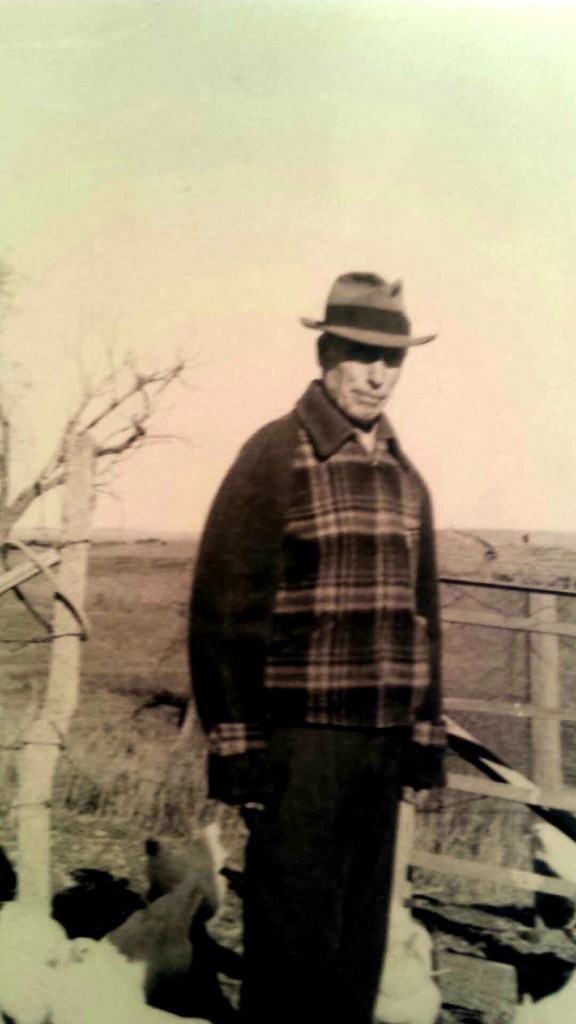
E.W. McNinch…Kip said his grandpa dressed like this all year around.

Eventually on Poverty Flat Ranch, they were faced with two dry years and low cattle prices. This was at the time of the depression in the thirties. In Sublette County there were about forty families including the McNinches, considered by the government as helplessly broke financially. A government man came to the Green River Valley to see what could be done to help this group. His suggestion was to close them out of business, give them a job and they would have to start all over again.

Before that happened, Franklin D. Roosevelt came on the scene and started the Farm Security Administration or FSA. It made loans to ranchers to buy cattle. Money was made available to shop owners so they could stock their shelves which would insure a greater volume of business. Farmers were able to buy new equipment and tools. From that time on for several years, business was good and people began to payoff their loans.

The McNinches realized they had a high hill to climb. They had no financial backing. They were proud that no family member ever had to put money in the kitty to keep them going. With faith and trust in each other, they began a sage brush removal program which in a few years put Poverty Flat off the map and into a hay producing area capable of supporting several hundred head of cattle.

In the next chapter I write about E.W. and Lois McNinch, I will quote some things from Mr. McNinch’s autobiography that I found to be very touching. He discussed the partnership he had with his wife, their commitment to their shared goals, and his philosophy about what he considers makes for a successful marriage and life.
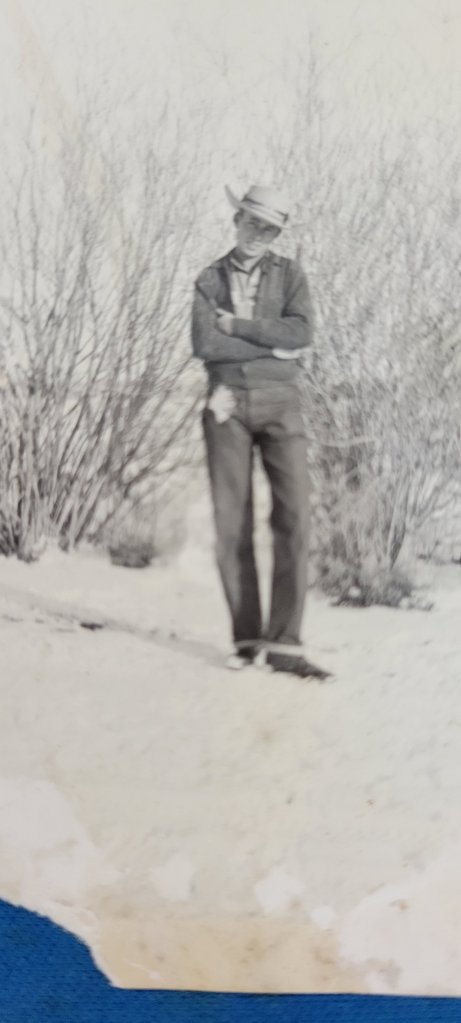
Kip’s father, Mack, was killed while serving in the occupational forces in WWII. He was 27 years old.
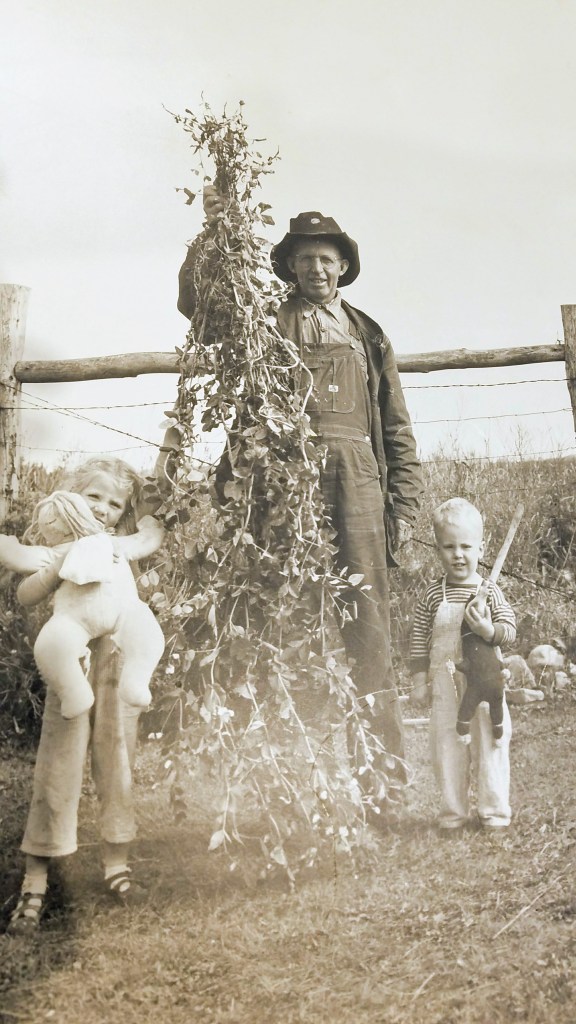
Kip’s mother, Naomi, another young widow, with Kip and his older sister, Karen.

Murdo Girl…Angels of friendship

I know the truth of their existence.

Of the earth or heavenly.

I try to offer no resistance

When their message speaks to me.

wp-15821647058549057802262750330743.jpg

Be they visible or transparent

Each one is unique.

Yet some qualities are inherent.

Some are boisterous some are meek.

wp-15821636302488610736173915935817.jpg

They help me know what I am missing.

Help me find the things I seek.

Is there something I’ve been dismissing?

Do I listen when Angels speak?

My body can betray me.

My thoughts can go astray.

Is this the way it must be?

A total chasm of disarray?

What can I do to find the strength

To make it through the darkest hours?

My Angels go to any length

To bring sweetness to what life sours.

wp-15821635775922276879950127713081.jpg

Be thankful for your Angels

Never look past those who care

They will bring you to a place

Where you no longer feel despair.

wp-1582163734854597033827773366596.jpg

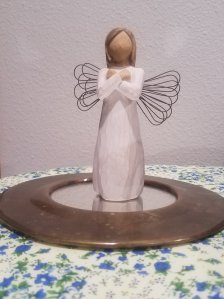
The first Angel is the Angel of Celebration, given to me by my sister-in-law and friend, Karlyce Newkirk.

The second Angel is an Angel signing love. She was given to me by my friend, Sherri Miller.

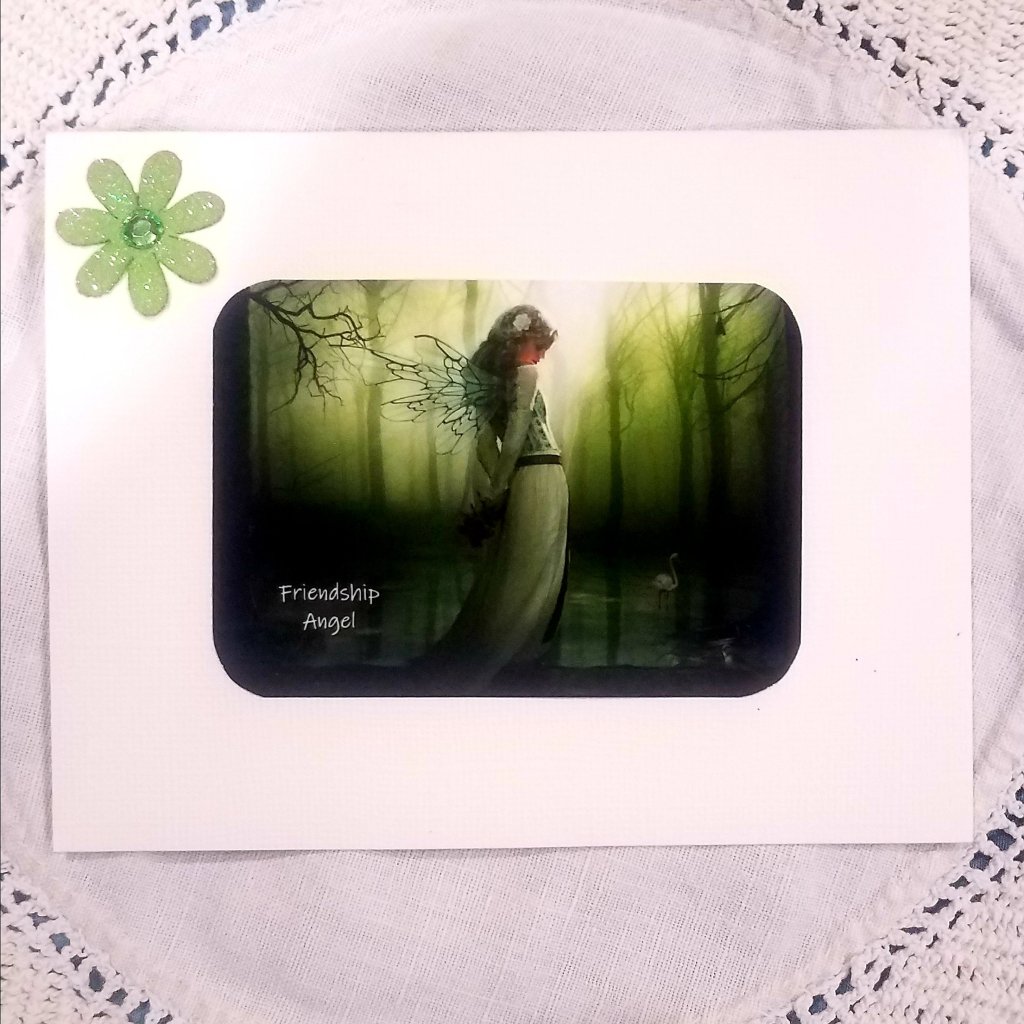
I received the third Angel, yesterday. My friend, Dianna Diehm had her made for me. She is the Angel of Friendship. Dianna also made the card which has a message inside that I will always treasure.

I will indeed be reminded to treasure my Angels, always. We all have them. We all need them. Nothing is more comforting than to be surrounded by beautiful and giving, Angels of friendship, love, and celebration.

Murdo Girl…The rythm of life…Here and there

It appears to me that Peter Swinson was a man who was constantly on the go. He finished the new house in 1908, shortly after he and Mary were married. They had five children while they lived there and remember, Mary was a widow with two children, so they had quite a family. He moved buildings in from a Russian settlement that had been abandoned and used them for granaries. Another house was moved in and used as a summer kitchen.

The Swinson house when it was first built

Still having time on his hands, Mr. Swinson joined the Masonic Lodge and the Eastern Star. He also became a member of the Knights of Pythias. That’s one I’m not familiar with. He belonged to a literary club where men met to discuss issues of the day. He often told others his philosophy which was, “Don’t expect government to do anything you can do for yourself.”

In 1918 , when he was 56, Mr. Swinson decided to retire and move to Presho where he thought educational opportunities for his children would be better. He had only five years of schooling, himself, but he was a self educated man. In earlier years, he always read the Norwegian newspaper, Fremad, and always took a daily paper.

I wasn’t surprised to learn that even with all of his activities in town, a year later, he decided to buy a house with 40 acres of land and start a dairy. He built a new barn and silo and the house became the dairy house where the equipment and bottles were washed and sterilized. The cream was also separated from the milk and Mr. Swinson delivered the bottles of milk to the stores and about town in a milk wagon pulled by Pat and Charlie. He enjoyed this because he loved people and he liked to visit. He joked that with his early milk route he often saw the new babies, who were usually born at home, before their fathers did,

A thought occurred to me that my dad was born in Presho in October of 1919. I wonder if Mr. Swinson was the first to see him.

I believe this picture is of Peter M. Swinson’s wife Mary, standing by the milk wagon with her son.

One day, as he was returning from his milk route, a truck backed into the wagon breaking his ankle. Healing was slow and he was never very active after that.

All born in the late 1800s, the three men whose stories I am telling, alternated between flourishing and enduring throughout their lives. They only had themselves and their maker to depend on when making important, life changing decisions. Taking care of their families was a responsibility they didn’t take lightly.

Mr. Swinson was a charter member of the White River United Lutheran Church. The church had a cemetery where his father was buried. He was occasionally at odds with the the Reverend, so when his daughters decided they would rather be Methodists, he didn’t object.

As we end this part of his story, Peter Swinson has made his way from Norway to Presho, South Dakota and it appears he will spend the remainder of his life in the Presho area. He has woven many colorful, but strong threads together and although his life has had a few twists and turns, everything he has learned and accomplished will have a huge impact on the lives of future Swinsons…

The rhythm of life…Life is what you make it

Jack Francis’ life began in Greenland, Michigan in 1890. I don’t know that much about his growing up years… or his parents. I learned from my uncle that he was of Scotch-Irish descent.

A year after WWI began, he married Content Abbie Bottum. Somewhere along the line she had changed her name to Constance. However, to all who knew her, she was just Connie. They began their married life in Ashland, Wisconsin.

Jack worked for a time loading iron ore onto barges (probably in Michigan) during the war period. He was excused from military service due to an old football injury.

In the early 1900s, thousands of homesteaders came to live on the Plains. Just as in the previous two stories, settlers began the hard grueling life of “proving up” or turning the land they were given by the government into farms for permanent settlement.

My grandfather was one of these settlers, only he came to establish three hardware stores in nearby towns that supplied tools and materials to the farmers.

In 1919, Jack and Connie moved to Vivian, South Dakota, with their young son, John. Jack opened his first hardware store there. My father, William Francis, was born that same year. His Army separation papers list his birthplace as Presho, SD. The two towns are close together, so I guess he could have been born in Presho, though I don’t know what the circumstances would have been.

In 1921 the family moved to Murdo, SD, a distance of about forty miles, where Jack opened a second hardware store. South Dakota was just getting settled by farmers during this period. I was told that Jack shipped in barbed wire by the railroad carload to supply materials to farmers wishing to fence in their new places.

Three years later, their third son, Charles, was born at home in Murdo. Later, Jack sold the Vivian store and opened one in Kennebec, another nearby small town. I was told he owned a third hardware store in Westfield, Iowa, and that he hoped to have a store to leave to each of his three sons

When Jack and Connie were married, Connie had the word “obey” removed from their wedding vows. She was a strong, independent woman, which was a good thing because she became a young widow left with three boys, ages 2, 7, and 11, and three hardware stores. Jack Francis died in the Mayo Clinic in Rochester, MN, on November 22, 1926, at the age of thirty-six.

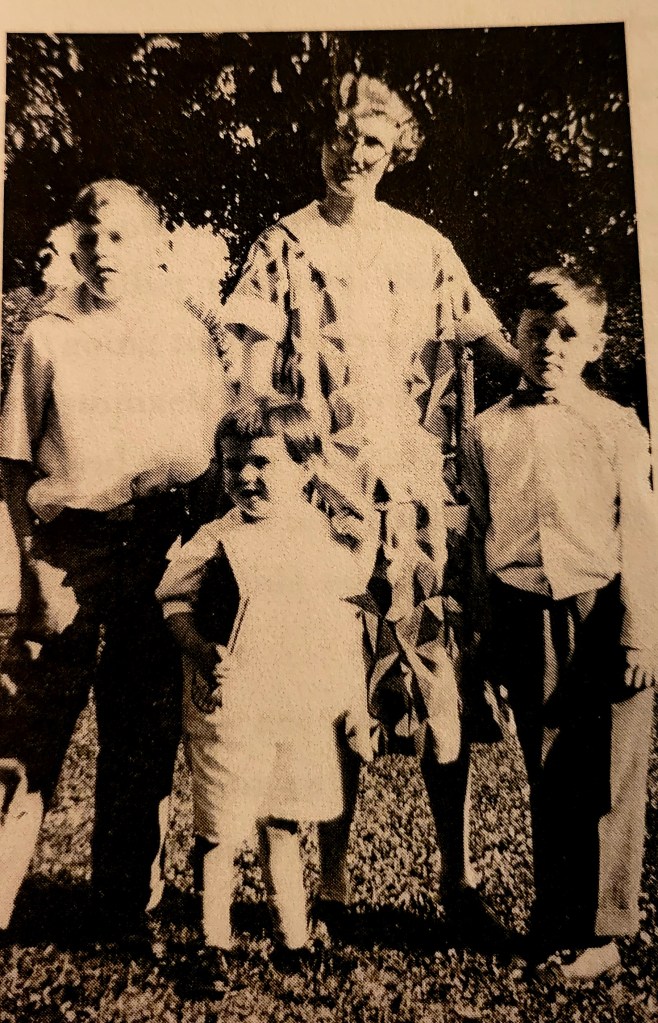
John, Grandma Connie, little Chuck, and my dad, Bill. (he looks sad)

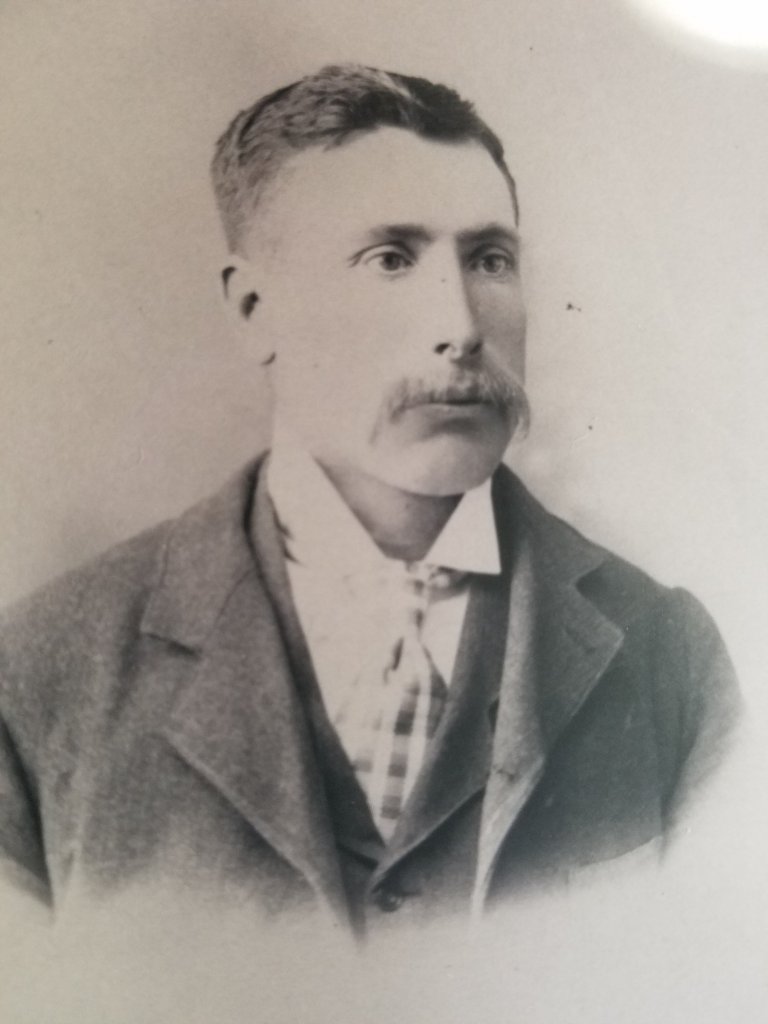
Though he died young, just think about the threads of his life that are woven into mine and that of my family and extended family. I was looking at the only good picture I have of my grandfather and noticed something very special. If I put my hand right under his eyes, I can see that my son, Mason, bears a strong resemblance to his great grandfather. He has the same eyes and eyebrows, and the same small ears and hairline. My other son, Craig, has his eyes, too, and so does my brother, Billy.

All three of the men, whose lives we are learning about were described as being small in stature and slender. They must have had little fear of the unknown, or they were afraid and forged ahead anyway. I was told that my Grandma Connie teased that when she arrived in Murdo and disembarked, the train was between her and the town. Had she been able to see the town before the train pulled out, she might have hopped right back on.

Small towners like to tell on themselves, but my Uncle Chuck said she really loved Murdo, as we all do. If it hadn’t been for these grandparents who moved there, I wouldn’t have had the joy of growing up in that wonderful little town.

Murdo Girl…The rhythm of Life…The long way to Wyoming

I’m going to tell you about Elba McNinch and John (Jack) Francis before I get into the war or I’m going to risk confusing everyone including myself. I have a tendency to get out of chronological order.

When Mr. McNinch was 96 years old, he wrote an autobiography that is truly amazing. He included many interesting stories about events that happened in his lifetime.

E.W. and Lois McNinch on their 66th anniversary. Elba served in the Marines in WWI shortly before he married Lois

Jim Thorpe, a Native American, lived thirty miles from where Elba grew up and always championed Native Americans. He broke many athletic records in the Olympic Games and was considered the greatest athlete of his time. Unfortunately, the metals he won were taken away from him in 1912. It was claimed that he won the metals illegally. It is almost universally viewed, today, as one of the great sports injustices. His gold metals in the decathlon and pentathlon were stripped from him after it was discovered that he had made a few dollars playing baseball.

When asked, Elba said the answer to his longevity was to take plenty of open air exercise, eat as regularly as possible, and sleep at least eight hours out of every twenty-four. I think he broke the code don’t you?

Young Elba grew up on a 1000 acre wheat farm in North Texas. He dropped out of school before finishing high school even though a favorite history teacher encouraged him to finish. Tired of working from daylight to dusk in 100 to 112 degree temperatures, he and a friend, with their parents permission, headed for Montana where Elba had an uncle. They saw quite a bit of country, but the jobs they were able to get to keep themselves going were not what Elba wanted to do for the remainder of his life.

He decided to heed his teacher’s advice and went back to Texas to attend a commercial school where he took bookkeeping and shorthand. He then transferred to East Texas where he taught bookkeeping and special penmanship. He taught for two years before enrolling in an academic school where he learned mathematics and English. After two years, working as a bookkeeper and mailman, he went to his history teacher, who had become a good friend, and told him he was leaving the south.

He landed in Denver, Colorado, tired and broke. He worked in a pea factory for a couple of months so he could eat regularly. When that job ended, he went on another job where he heard favorable things about Big Piney, Wyoming. He took the train to to Rock Springs and then a mail truck to Opal. From there, he caught a ride in a wagon pulled by horses. He said he arrived at his future home on April 10, 1915, He was twenty-six years old.

There was a lot of hard work ahead of Elba McNinch before he was able to file a homestead. He had moved from 112 degree summers to Big Piney which is often referred to as the coldest spot in the nation. A sign outside of town says, “Many came through here, but nobody stayed,”

E.W. and Lois with great granddaughter, Heidi McNinch

We’ve learned about two incredible men who had what it took to find their way in life and manage to end up just where they were supposed to be. The threads they weaved along the way contributed a great deal to my life and to Sherri my future friend as well.

Murdo Girl…The rhythm of life

They were from another generation. Their world was different from ours. Why should we get to know them? What can be gained? Learning who they were and the twists and turns their lives took will no doubt help us to better understand the rhythm of our own lives.  

Every choice, and every chance happening that affected the lives of our parents, grandparents, and great-grandparents is woven into the fabric of our lives. Whether we knew them or not, the pasts of those who came before us, from the intro to the outro, literally took us to where we began and greatly influenced who we are.

We’ve all had people in our lives who have touched our hearts, taught us a hard lesson, or otherwise influenced our thoughts, actions and beliefs.

I think this story explains why someone who grew up in Murdo, SD, quite accidentally befriended someone who was raised in Presho, SD. These two small towns are only 33.59 miles down the road from each other.

I am going to attempt to prove my point by comparing and contrasting the stories of three men who were born in the 1800s and two who were born in the early 1900s. I became aware of several coincidences while I was gathering information. I will share those with you when we get to those parts in the story.

I will begin by describing the lives of three men. I think you’ll find their stories interesting.

Peter M. Swinson, born March 3, 1862 in Vinje Norway…he died July 6, 1942…he lived in Presho,.South Dakota
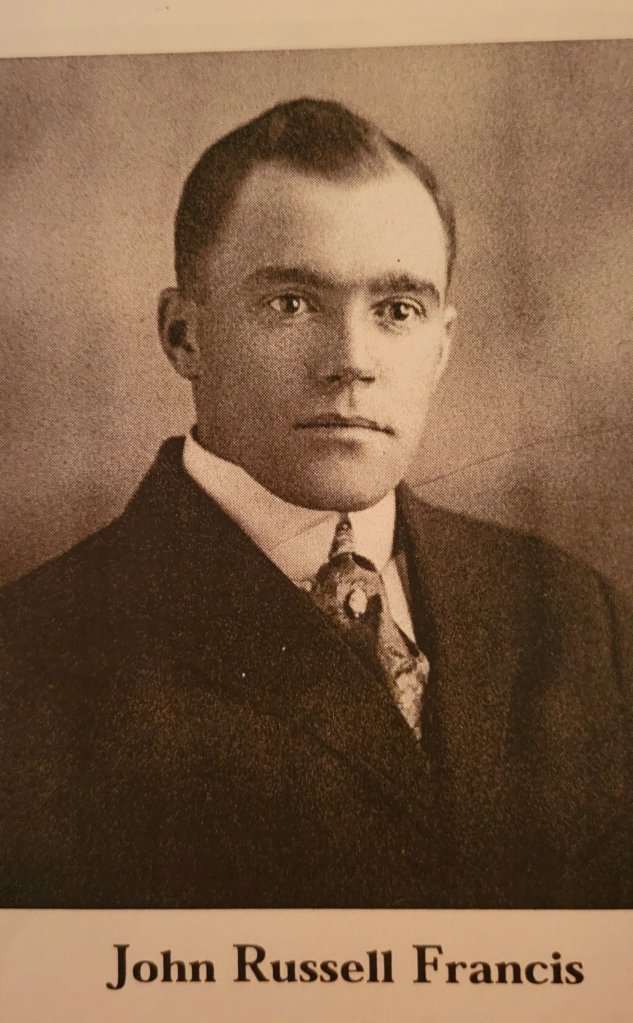
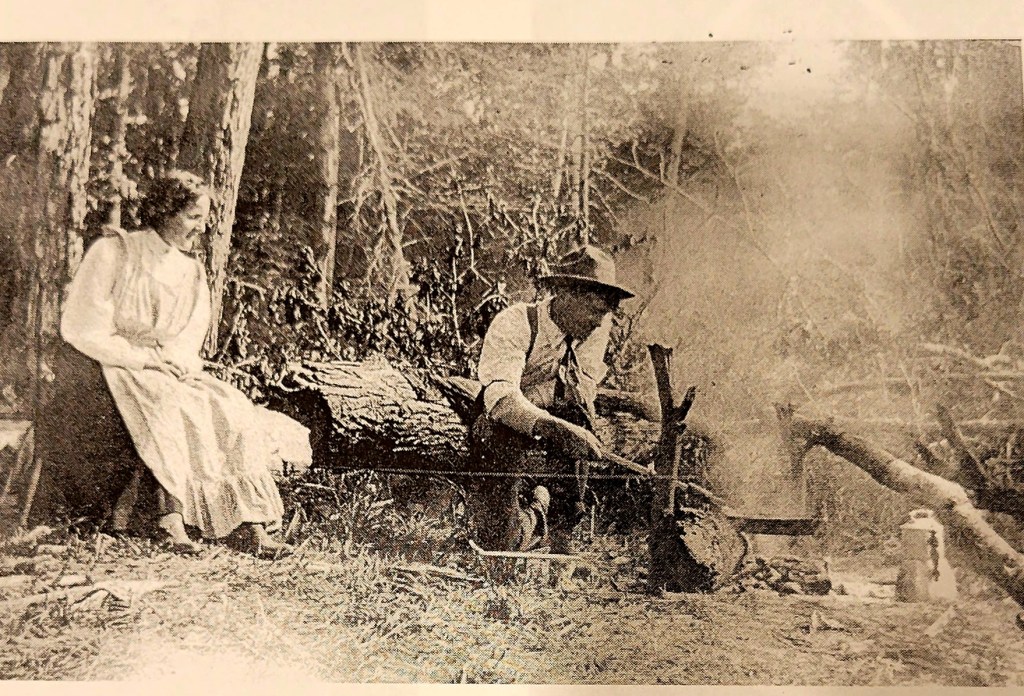
John Russell Francis was born October 4, 1890 in Greenland, Michigan…he died November 22, 1926…he lived in Murdo, South Dakota. (Notice the attire my grandparents wore while on a camping trip.)
E. W. McNinch, born April 24, 1889, near Charlie, Texasdied April 15, 1988…lived in Big Piney, Wyoming

Peter M. Swinson is the grandfather of Sherri Swinson Miller who was raised in Presho, South Dakota and now lives in Pierre, South Dakota.

John Russell Francis is the grandfather of Mary Francis McNinch, who was raised in Murdo, South Dakota, and now lives in Mabank, Texas.

E.W. McNinch is the grandfather of Kip McNinch, who was born and raised in Laramie, Wyoming and now lives with his wife, Mary in Mabank, TX.

Peter M. Swinson

Mr. Swinson came to the United States in 1879 when he was seventeen. He landed at the lake port of Detroit and then went on to Arcadia in Trempealeau County, Wisconsin. It is not known when he got to Dakota. In the 1915 census he reported that he had been in South Dakota thirty-one of the thirty-six years he had been in the United States.

On October 24, 1892, he renounced his allegiance to the king of Norway and became a citizen of the United States.

Typical log house built on the Prairie by homesteaders

The next years were spent homesteading and improving his land.

**Passed by Congress in 1862, The Homestead Act provided for the initial settlement of present-day South Dakota. A typical 160-acre farm cost about $18. A settler had to homestead the land for five years.

Mr. Swinson established residence in 1894 and in 1907 He made final proof that he had fulfilled all of the homestead requirements. He married Mary Christensen Lillebo, a young widow with two small sons, on January 18th of 1907.

By this time he had a log house, a small barn, a chicken house, a good well, and a good dam. He had one acre breaking and 100 rods fencing. This was all worth about $1400.00. Mr. Swinson was grazing 250 head of livestock and had thirty chickens. His new bride was also a homesteader. With their combined land and some they accumulated from people who moved, they eventually put together a 1500 acre ranch.

The couple lived in Mr. Swinson’s log house with grass growing out of the roof. He later told his children that he woke up one night with a rattlesnake in his bed. He said the most common sound that broke the silence in the prairie was the lonely howl of the coyote. Shortly after their marriage, they started to build a new house and as soon as the basement was finished they moved in.

I gave a lot of thought to the way things were back then. Mr. Swinson was the only one of the three in the story who immigrated. Imagine what that would have been like for a seventeen year old boy. He did what was required of him in order to take advantage of the opportunity to homestead. The land wasn’t given to the brave homesteaders… they earned it. Through perseverance and extremely hard work, they were able to make a good life for their families. Some didn’t stay and some didn’t live through it, but the ones who built up their farms and ranches, had to be tough. The threads of their courage and ability to overcome are woven through the hearts and souls of those who came after them.

Next: WWI and the great depression…

Murdo Girl…The TV Tray Tent (one of my faves)

I feel bad. Today I told Mom her teeth are yellow. She was getting onto me about brushing my teeth, and I said, “Well, my teeth are whiter than yours!” I expected her to say something back, but she didn’t. Of course my teeth are whiter. Her teeth are thirty-one years older than mine are. I couldn’t really tell her that now could I? Then, I got the bright idea to make a tent out of a TV tray and a blanket, and sleep out in the front yard. It works pretty good. You can actually use two TV trays if you have a big enough blanket. You have to be able to stretch the blanket over the trays and pound a clothespin into the corners, and then into the ground. Don’t ever plan on sleeping two people in a one TV tray tent.

I got myself all set up, and I thought everything would be fun. It got dark kind of early. I have a flashlight, but what fun is it to lay there in your front yard under a TV tray tent all by yourself, without anybody to even talk to? I don’t have a dog. Billy has a cat named Yappy, but she hides up in the attic above the garage all the time. She only comes down when she brings her kittens to us. She’s friends with Pete Reese’s tomcat. Pete is the old man who lives next door. He has a tomcat we call Tommy. The cat got his tail partially frozen off one bad winter. I personally don’t think cats are all that much fun. We kept one of Yappy’s kittens once and named him Tinkerbell. After he got bigger, he ran off somewhere and didn’t come back for a whole year. Cats aren’t fun, but they must be smart to know how to get around like that.

You know, I’m just laying here thinking. I really don’t know Pete Reese very well. If he lets his cat’s tail get frozen off, who knows what he might do to a kid who’s laying outside under a TV tray tent? The ground is getting hard on me. Dad never got around to planting grass, so I’m laying here on prickly weeds. What a dumb idea this was. Mom should have told me, no. She’s probably still in there feeling self-conscious about her yellowing teeth. Maybe I should just go in and finish this night out in my bed. I sure hate to admit defeat. On the other hand, how are you going to know if something will be fun unless you try it out? I could just say I tried it out and it wasn’t fun. It’s not like I just got scared and went in. I stayed out here quite a while and I’m also without food and water.

Shoot, I forgot to go to the bathroom before I came out here. What if I fall asleep and have to go inside the house and go to the bathroom in the middle of the night? I’ll have to leave my TV tray tent unprotected. I don’t have any idea how long it’s been since somebody changed the batteries in this flashlight.

I feel sorry for Mom. What if something happens to me? She’ll spend the rest of her life blaming herself, because she started this whole chain of events when she confronted me about my teeth. Do you know how long a person should tryout an idea like sleeping outside in a TV tray tent, without food and water, and a flashlight with unknown battery life? I don’t think we have another flashlight so Mom can’t check on me even if she wants to. I shouldn’t be so thoughtless.

Oh no… I’m going to have to go inside. I just remembered something. I forgot to brush my teeth.

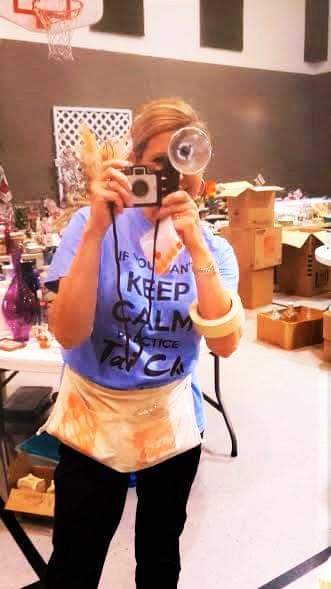
Murdo Girl…FUMC is preparing for a humongous garage sale!!!

We’re four days in and all I can see are millions of tables surrounding me.

I see dishes, and knick knacks, and purses, and pictures… linens and tools, and all kinds of fixtures.

We pray every day that we can get through it. We’ve piled it so high…can we get to it?

We’ve got jewelry and gadgets and all kinds of books; frames and mirrors to see how you looks.

We have tables of toys for toddlers and babies; electronics that work! We don’t sell you maybes.

Bring your dollars and quarters and a credit card. We’ve got appliances, pillows, and things for your yard

Hurry before our fearless leader buys all the toys!

The Methodist garage sales sure are the best. Bring all your friends they’ll be really impressed.

If the sun doesn’t shine and the rain comes our way, we’ll be smiling and selling, anyway.

Friday’s the day and at eight o’clock sharp the doors will be opened and the fun will start!

Thank you ladies…the food is delicious and I’m sure the desserts are really nutritious

Friday and Saturday, April 23rd and 24th…FUMC Mabank…across from Eubanks Funeral Home

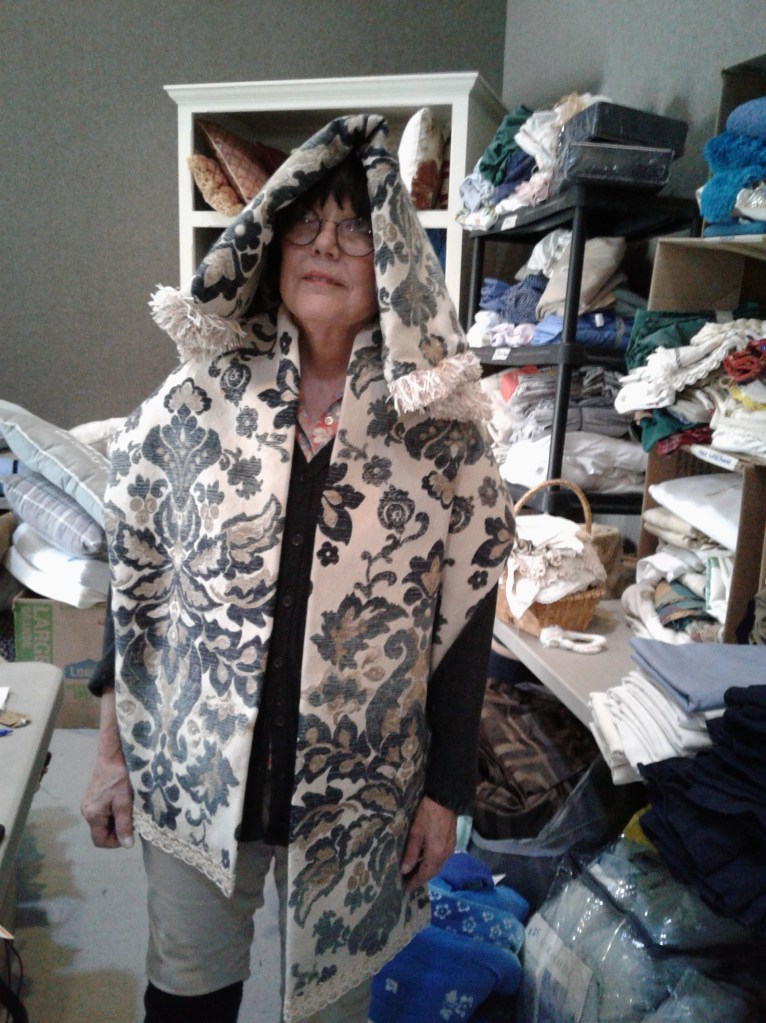
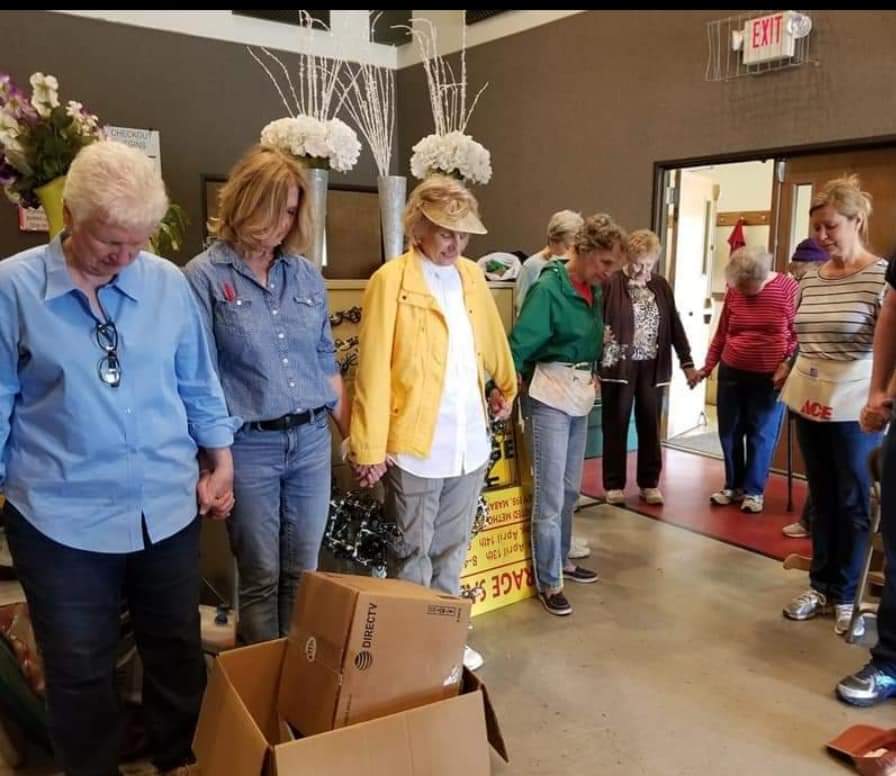
Some photos are from previous garage sales. The pictures are older, but the people are not.

Murdo Girl…In a lifetime

The world has changed in the last hundred years.

Let’s think about that for a minute.

If our grandparents could have been foreseers

Would they have picked now to live in it?

Back then parents raised their kids.

Now, some kids raise their parents.

Today, there aren’t as many forbids.

Back then not as much forbearance.

When Grandpa was a youngster

They had to blow out their lights.

Many years later they reached the juncture

When electricity brightened their nights.

Buckets of water were hauled from a well.

Now, it flows from a faucet.

These days we all talk on our cell

Party lines made it easy to gossip.

The homesteaders life was a gamble

Sometimes it was root hog or die.

For most it was all they could handle.

On hope and a prayer they relied.

The competition today is daunting.

The human spirit has suffered a blow.

Back then they were working not wanting

To reach each new status quo.

We didn’t decide to live now or then.

The choice was not ours to face

A good life doesn’t depend on the when

If we draw strength from God’s love and Grace?